Fifth-generation cellular network technology, also known as 5G, is a ground-breaking technological innovation which is poised to enhance existing broadband services. With the advent of 5G technology, the expansion of mobile networks which will support a varied range of devices and services is set to take place in the foreseeable future.
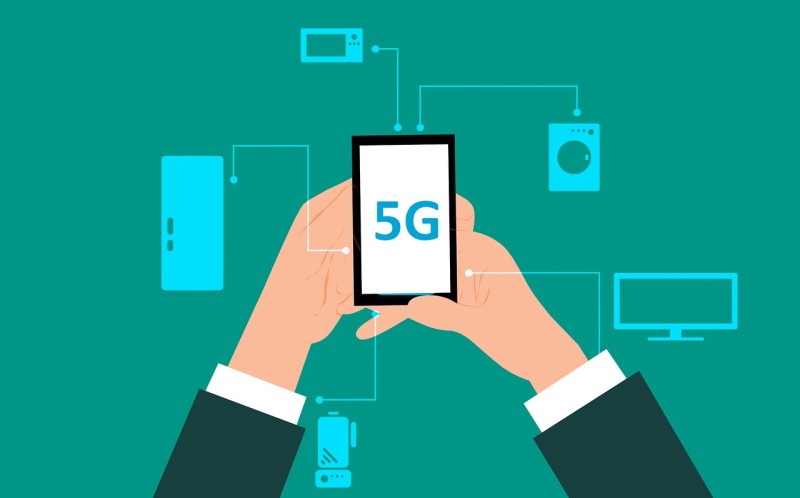
On the other hand, 5G is not only enabling the advancement of mobile networks, but also connect a diversity of industries such as retail, education, entertainment, and transportation, among others, with efficiency, enhanced performance and cost.
5G technology is being developed at a fast pace, driven by the need to offer ubiquitous connectivity for an extensive range of applications.
The technological fields expected to witness substantial disruptions are broadly classified under five major sections – device-centric architecture, massive MIMO, millimeter-wave (mmWave), native support for machine-to-machine (M2M) communication, and lastly, smarter devices.
Device-centric Architectures
5G is anticipated to bring changes to the base-station-centric architecture of cellular systems. The concepts of uplink and downlink may witness traction, along with control and data channels.
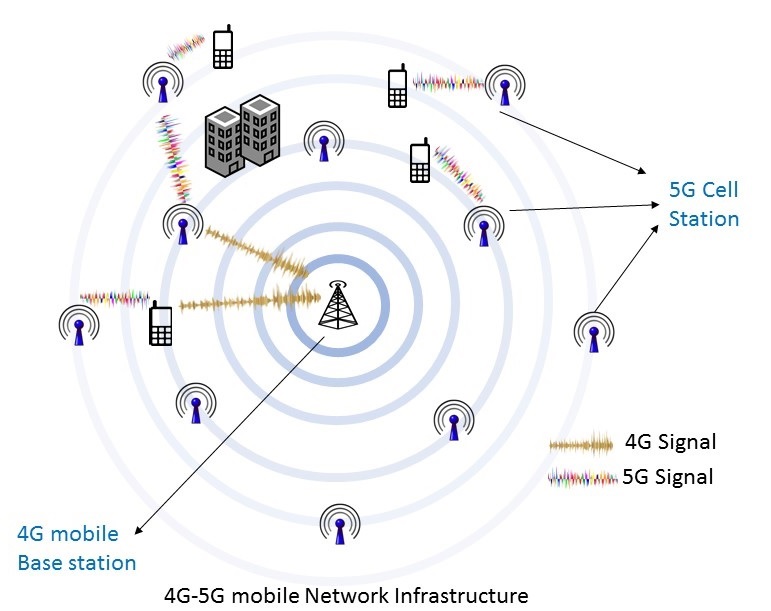
These concepts are expected to develop under 5G, to improve the route information flows with diverse purposes and priorities for distinct sets of nodes within the network channel.
Cellular networks have been experiencing notable capacity and energy difficulties due to the constant, significant growth of mobile data traffic.
With the increasing smartphone penetration across the globe, cellular data traffic is bound to grow in the coming years. 5G technology is likely to be used to control these levels, through device-centric wireless networks.
Massive MIMO
Massive multiple-input, multiple-output, commonly referred to as massive MIMO, is an extension of MIMO, which mainly assembles antennas together at the transmitter and receiver to offer improved throughput and enhanced spectrum efficiency.
It has been noted to have substantial potential to meet the need for relatively higher data capacity for cellular networks in the coming years.
Massive MIMO technology currently needs some significant structural changes, specifically in macro-base-station designs, and 5G technology integration with massive MIMO is also anticipated to lead to new kinds of deployments.
Millimeter-Wave (mmWave)
The rapid rise of cellular data growth and smartphone penetration is increasing unique challenges for global wireless service providers to tackle a bandwidth shortage across the globe.
The bandwidth shortage worldwide is encouraging the research and development activity towards mmWave.
5G network systems are estimated to utilize the massive frequency spectrum of mmWave for broadband cellular communication networks in the future, to increase communication capacity significantly.
Moreover, mmWave is also likely to witness a rise in the scope of applications in 5G technology.
On the other hand, there are numerous challenges at present which need to be addressed to escalate the integration of 5G networks with mmWave, such as effective control mechanisms, heterogeneous networking, software-defined network structure, among others.
Native Support For Machine-To-Machine (M2M) Communication
5G technology is an advanced generation of communication systems, to an extent where it will be able to support the latest communication models such as Internet of Things (IoT) and Machine-to-Machine (M2M) services as well, with complete or almost-complete automation.
Smarter Devices
The advent of 5G in the coming years is going to bring about technological breakthroughs to consumers in a fascinating way.
5G networking systems will have the potential to revolutionize the existing gadgets and devices to a broader landscape.
The possibility of smart homes, smart factories, and smart cities are likely to be the near future.
These advanced technologies are a broad categorization of the major disruptions that 5G is anticipated to bring out.
In addition to these, there may be significant and minor positive disruptions that the next generation of communication systems, 5G technology, is likely to create and broaden the horizons of global technological advancement tenfold.

Leave a Reply