5G mobile technology is widely spoken about in the press lately, as more and more nations are on the cusp of formally adopting 5G into their cellular networks.
We all know about 3G and 4G LTE, which are currently the most widely used standards of cellular networks that we use on our mobile phones.
According to experts, the fifth generation of mobile networks will pave the way to an extraordinary advancement in all aspects of technology.
But what is 5G and what are its advantages and disadvantages? This is what we’ll discuss in detail below but here is a quick summary of the main points:
The advantages of 5G mainly focus on its ability to deliver much faster Internet speeds and the positive effect it has on jobs and technological advancement. The disadvantages of 5G mainly focus on its high cost in setting up and the ambiguity of the potential problems that it might bring to health or privacy.
Let’s take a dive into this topic by first looking at what 5G is, its pros and cons, and the possibilities and use cases of using 5G technology in our lives and businesses.
Brief Discussion about 5G
5G is the next-generation standard for cellular networks. It is meant to be much faster and more efficient than the current standard of 3G/4G.
Every few years, a new standard for cellular networks becomes available. Each time an upgrade happens, users experience significant improvement in speed, latency etc. With 5G, these improvements will be much larger than anything we’ve experienced up to now.
Continued upgrade in technology is important because cellular networks play a bigger and bigger role in our daily lives.
Two decades ago, it can be said that we used our phones mostly for calling and texting. A decade later, we began to use our phones more extensively for Internet searches, Internet-enabled calls (like Skype), Internet-enabled messaging (like Whatsapp, Viber messaging etc), rich social media interactions etc.
Today, using the Internet has become the chief purpose of owning a cellphone. Beyond expectation, the tiny device we hold in our hands has become our connection point to the world. Financial transactions, meetings, studying, socializing – these are a few examples of how we use the Internet today.
Therefore, in our increasingly Internet-reliant world, faster cellular networks are not just nice ideas – we need them to make our economies competitive and for people to be smarter and more informed.
With so much of life conducted over the Internet, it is crucial that cellular networks keep improving to accommodate for these changes.
This is where 5G mobile technology comes in. 5G offers faster cellular networks, meaning that our social interactions, business transactions, communication needs etc can be performed quickly and with much richer data transfers (such as HD video etc).
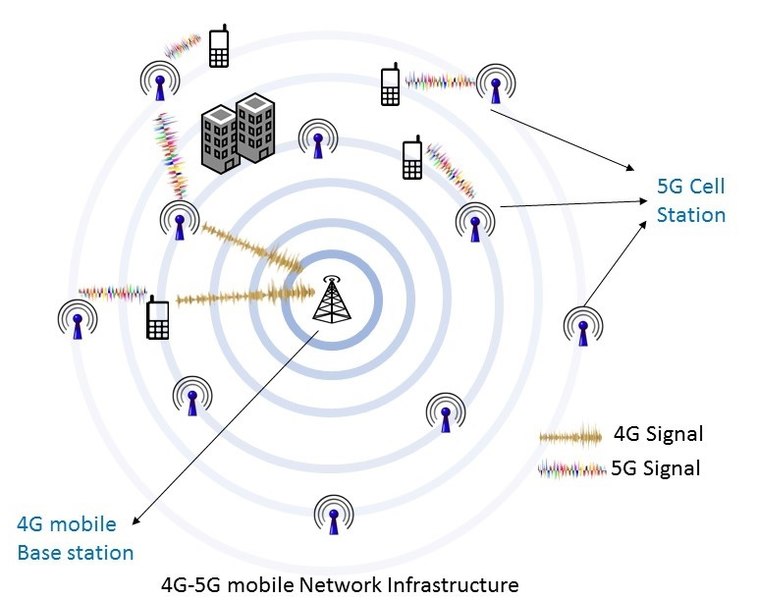
5G technology works by dividing the service area into smaller sections known as cells. Each cell has local antennae that connect to the Internet and telephone network by radio waves.
This new technology will have greater bandwidth, allowing for quicker download speeds of up to 10 gigabits per second (although the theoretical peak speed can reach up to 20Gbps based on IMT-2020 requirements).
5G is expected to eventually make cable Internet obsolete. When it comes to 5G, it’s all about speed, speed, speed.
Let’s now see some pros and cons of this new mobile technology.
Pros of 5G Mobile Technology
Higher Network Speed and Bandwith
As mentioned above, the key answer to the question of why we need 5G mobile technology is its speed.
With Internet speeds increasing, all tasks and processes involving the Internet will also speed up. And since so much of modern life is conducted over the Internet, the benefits of this cannot be overstated.
Everyday tasks – from purchasing an item from an online store to sending money to another bank – will become more efficient.
Consumers will have greater confidence in completing transactions online. Businesses with an online presence will grow, and jobs will increase as a result.
Much Lower Network Latency / Lagging
This benefit flows naturally from the first – faster network speeds mean less lagging. Seen from an economic point of view, the time wasted on lagging Internet speeds and waiting for webpages to load is opportunity cost.
The longer a consumer needs to spend on completing a task online, the less likely the consumer will follow through.
Our future very much relies on faster and faster speeds. The more quickly tasks can be completed online, the more natural they will become.
With less network latency and lagging, tasks like instant video calls and ordering products online will become more and more commonplace to the point of being mundane.
Cell Towers Will Be Much Smaller
Cell towers are part and parcel of cellular networks. They transmit data to and from a cellular device to the wider network. Current generation cellular networks like 4G require the construction of cell towers every few miles to work.
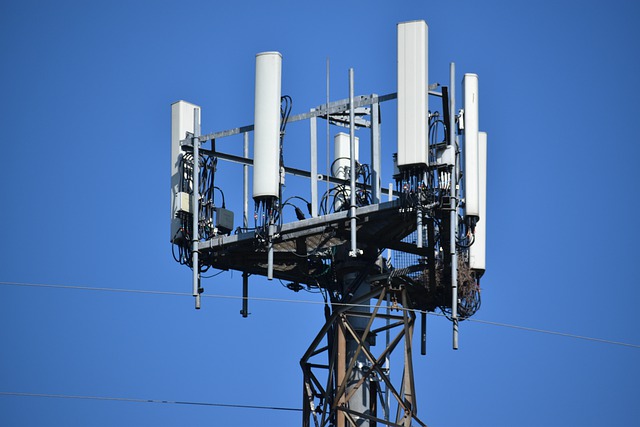
5G Cell Tower
The difference with 5G is that these cell towers do not need to be very large and can be constructed much smaller.
This is because they do not require as much power, and as such can be built relatively small. This means there is more flexibility in terms of locations that these cell towers can be installed/mounted, and their smaller sizes mean that they’re easier to blend in with the surroundings.
Much Higher Capacity
To understand the advantage that 5G provides, it’s useful to draw on a simple analogy. If 4G capacity is like a two-lane road, 5G would be like and 6-lane super-highway.
According to Qualcom, by expanding into a new mmWave radio spectrum, 5G is designed to offer much higher network capacity (approximately 100x more) meaning that more client devices can be connected to the network at any given time.
Enables the Development of New Innovative and Mission Critical Technologies
5G technology opens the door to greater Internet innovation as it makes the Internet an increasingly viable and reliable platform for innovation and mission critical applications.
As we have seen, virtual reality and augmented reality can benefit greatly from 5G technology. With 5G technology being the foundation, greater technological advancements can be made such as mass adoption of IoT and smart-tech.
The idea of smart cities can truly begin to materialize. Only time will tell about all the benefits 5G can bring in the area of innovation and Science but the future looks very promising.
Cons of 5G Mobile Technology
5G Can Reach Shorter Distances Compared to 3G / 4G
5G technology operates with waves at higher frequencies compared to existing 3G / 4G technology, meaning that they can only travel shorter distances.
This is a potential downside because ideally, we would like to have signal waves that can cover greater distances so that the cost of constructing cell towers can be minimized.
However, the nature of 5G technology means that the advantage of faster speeds cannot be separated from the downside of shorter distances for the foreseeable future.
More Cell Towers Need To Be Constructed
Following the first disadvantage of 5G mobile technology, more cell towers need to be constructed to address the smaller coverage areas.
However, it should also be noted that since the cell towers needed for 5G are smaller in size, they can be installed in more discreet locations, such as on the side of buildings or on top of streetlights.
More Energy Consumption on Devices
Because 5G technology allows for more Internet consumption, this means that energy on mobile devices would be more quickly consumed. This is true even today, as more Internet apps mean more energy is used up, even while the apps operate discreetly in the background.
For example, if video calls become more common due to 5G technology, energy on mobile devices would be more quickly used up because these activities simply use up more energy.
However, this can be avoided if innovation in mobile devices increases energy storage, which is already happening today. Moreover, newer 5G chipsets for smartphones are expected to be more energy-efficient.
High Cost To Establishing 5G Technology
As a completely new technology eco-system, mobile companies that adapt 5G would need to pay a very high cost to establish and maintain it.
Much of the cost incurred would go to constructing new cell towers – as 5G technology require a greater number of cell towers per mile compared to existing technology, building a 5G network that can reach a large number of customers would involve the investment of several billions of dollars.
Concerns of Health and Security Issues
As with any new technology, there is always the fear of the unknown. Newly constructed 5G cell towers have already become a source of controversy as some people claim that more health problems will arise from the extra radio waves.
There are also fears of how secure the networks will be and whether user privacy can be compromised – something that governments of several nations are already studying in detail.
What Are Some of the Possibilities and Use-Cases of 5G?
Providing a Viable Alternative to Fixed/Wired Broadband Internet
Fixed/wired broadband Internet is usually used at home. It is often cheaper than using mobile Internet and most people would choose to conduct their online tasks over their home WiFi internet instead of using cellular data.
However, 5G Internet speeds are so fast that it would take mere seconds to completely download a movie in HD for example.
With its incredible speeds, you can be watching a few different HD videos at the same time and download documents at record speeds. If rolled out correctly, 5G is going to be the fastest, most secure Internet option available.
This means that 5G mobile technology is set to offer a serious alternative to fixed/wired broadband Internet.
Everyone can fully rely on 5G for all their Internet needs. This would, of course, signal a paradigm shift in how users use and apply Internet technology.
Providing Better Quality Video Calls On Cellular Network
When Skype first became popular around two decades ago, it was seen as a miraculous new technological development because it allowed people from different parts of the world to speak to each other without the need of paying loads of money for call minutes.
However, anyone who has experience with Skype in the early days would remember very hazy video qualities and unstable connections that kept breaking off. This was due to the relatively slow Internet speeds available at that time.
Fast forward to today, video calls are increasingly becoming the norm, as more and more people opt to conduct business meetings over video calls.
People are also seeing video calls as a viable alternative in catching with up someone if they are unable to meet in person. For all these video interactions, fast Internet speed and low-latency are key elements of quality communication.
The better the Internet quality, the better the video quality – and also, the more natural the conversations conducted over video. With 5G set to be bringing record-breaking speeds and low tency, video calls conducted over high definition with little to no break in the connection will be the future.
Virtual Reality (VR) and Augmented Reality (AR)
In 2016, an online game was gaining popularity across the world: Pokemon Go. With the use of augmented reality, the game allowed users to ‘catch’ Pokemon, seemingly in real life.
Augmented Reality made Pokemons appear in front of users, making users feel like they were interacting with Pokemons in real life.
Augmented reality (AR) and virtual reality (VR) are set to be tech’s next big thing. Besides in the use of games, AR and VR have more practical, educational purposes too, such as a surgeon using VR to teach students anatomy.
With the coronavirus pandemic sweeping across the world in 2020, some travel companies are turning to AR and VR to give customers the experience of traveling the world without ever leaving their country.
Once again, AR and VR function best with good network connections and 5G will be able to push AR and VR technology forward in unprecedented ways.
Connecting Self-Driving Cars
The idea of self-driving cars – being able to relax in the passenger’s seat while your car takes you to your destination – used to be a fantasy but is today a very viable reality. Self-driving cars are becoming more and more common in certain countries, such as the UAE.
They work by creating and maintaining a map of the surroundings. Self-driving cars also have sensors located on different parts of the car. They also have video cameras that can detect traffic lights, stop signs, and so on.
Essentially, self-driving cars can process complex information simultaneously to provide for a relatively safe driving experience.
However, this can only be accomplished if the cars are connected to a mobile network. With the introduction of 5G mobile technology, self-driving car manufacturers have greater latitude to generate greater possibilities with their autonomous technology.
Conclusion
5G mobile technology is set to be the future standard of network connectivity, and its implementation globally is inevitable.
It brings with it a host of advantages, mainly pertaining to the increased speeds it provides Internet users along with its capacity support for IoT, smart devices and mission critical applications.
Disadvantages of 5G include the cost of implementing such a breakthrough network, and potential health and security concerns.
The rollout of 5G will herald a new future for our digital age; how successful that age will be is up to our collective effort.

Leave a Reply