Thanks to advancements in technology and a greater emphasis on machine automation, IT/OT convergence looks to be an evolution for the modern industry or the next stage in a long process of improvements.
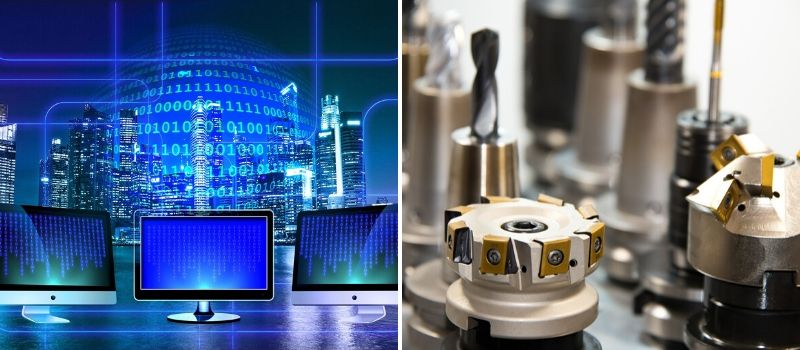
Both technologies have long, isolated histories that possess separate paths in the world of industry.
Information Technology (IT) relates to information systems, while Operational Technology (OT) is more about system controls and direct interactions.
A convergence between the two allows for completely merged or collective systems, resulting in real-time decision-making opportunities and complex yet accurate operational controls.
To get a better understanding of what the movement or merger means, one must consider the roles IT/OT teams played in the past, and what a union means for future operations.
What Is IT/OT Convergence?
IT/OT convergence is a combination of the two technologies with the express goal of creating a more streamlined and manageable system.
Information Technology encompasses the use of computers, mobile devices, storage, networking devices and any physical infrastructure and technologies that create, collect, store, process and share digital content or data.
Operational Technology includes industrial and enterprise control solutions that monitor, adjust and develop operational processes and events.
Unlike IT, most OT applications and devices are not networked, nor do they tend to involve communicative or networked solutions.
Most tools used for OT applications are not traditionally computerized, but instead locally maintained.
Different teams handle both platforms or areas. Merging them combines the entire crew’s efforts, but also enables some incredibly fast-paced opportunities — also known as real-time.
At the heart of the convergence is IIoT or the Industrial Internet of Things.
What Role Does IIoT Play?
Automation, communication and remote controls improve with the help of modern, smart technologies. One of the most significant contributors is IIoT or the Industrial Internet of Things.
Internet-enabled sensors embedded within a machine, for example, might relay information to a central control system.
At the same time, a similarly smart electronic operating unit ensures the necessary parties can remotely control it.
All these components sync up to an automation solution, powered by AI. To think, it’s just one of many different smart and IoT-enabled examples. The possibilities are endless.
Unlike smart home and consumer-grade devices, however, most IIoT applications aren’t born out of a need for convenience.
Yes, there is a desire to move towards smarter and more efficient systems, but the ultimate goal is to increase output and boost profits — which also includes lowering operating costs.
Of course, swapping to a synergistic environment is not an overnight event. It takes time, lots of resources and plenty of testing to get right.
Moving an office IT infrastructure can be a tricky and resource-intensive process, let alone merging both areas or systems into a central unit.
That’s where IIoT makes a difference. Rather than rolling out an entire network at once — which can and does happen — organizations can take it step-by-step.
The focus instead becomes about creating infrastructure and an environment where smart devices or sensors can thrive.
Then, once that’s achieved, the next goal is to roll out IoT solutions little by little to augment the operation.
Are There Risks?
Many legacy systems come online as a result of the merger — most of which were once disconnected and locally operated. That opens up the related networks to new cyber risks.
Although the reality is a little more involved, by opening up operational technologies to remote access and monitoring, foreign attackers could seize control.
The combined nature of IT/OT also implies those attackers would have mission-critical data at their fingertips, too.
No system is ever truly “hack-proof,” but there are ways to prevent unauthorized access and protect any sensitive data.
Encryption, for starters, should always be used, especially in the industrial world. Users should establish and follow proper authentication and user-access protocols, as well. That ensures that only trusted parties have access to the data and control systems.
AI and machine learning solutions can help mitigate some of the user-related risks, however. If the system runs optimally sans human input, there’s little to no reason to have several parties involved and accessing the necessary operations.
Changing the Future of Technology
The IT/OT convergence will mean a lot of things for various industries — events that are both beneficial and disadvantageous are bound to happen.
Luckily, tech experts have the knowledge to use this new technology to the fullest while avoiding cybersecurity intrusions.
Author Bio

Megan Nichols is a STEM writer who enjoys discussing the latest technologies and scientific discoveries. She regularly writes for sites like IoT Times and Real Clear Science. Megan also writes easy to understand technology articles on her personal blog, Schooled By Science. Keep up with Megan by subscribing to her blog or following her on Twitter.

Leave a Reply