SpaceX successfully launched more than 20 Starlink satellites despite experiencing multiple delays, showcasing the company’s capability to persevere and accomplish its mission objectives under challenging conditions.
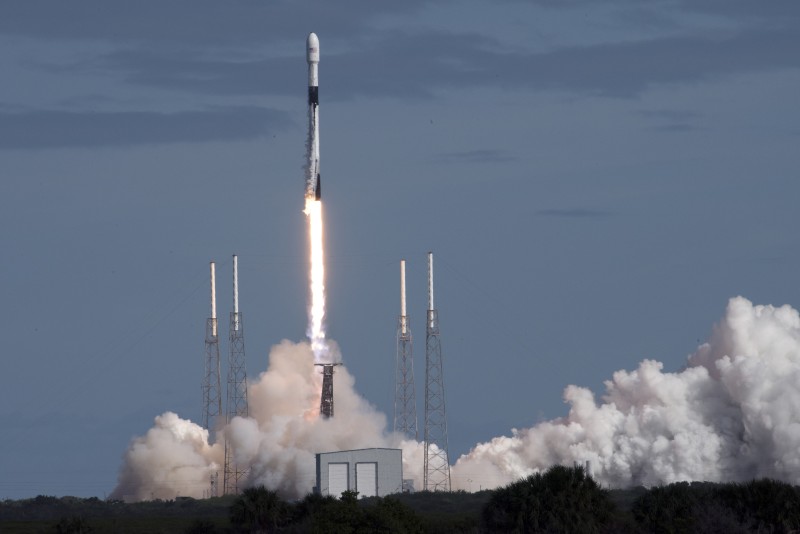
SpaceX’s Falcon 9 rocket launched from Launch Complex 39A at the Kennedy Space Center with over 20 Starlink satellites.
The launch, part of the Starlink 6-38 mission, occurred on Sunday night (Jan. 28) at 8:10 p.m. ET following a series of delays.
Initial plans scheduled the launch for 6:15 p.m. ET but were postponed to 7:21 p.m. and then 7:37 p.m. without publicly stated reasons.
SpaceX was prepared for backup launch attempts until 9:55 p.m. ET. However, the company did not specify the number of available backup attempts.
Meteorologist Zach Covey predicted favorable weather for the launch with a 90% chance of success, despite potential liftoff wind concerns.
The Falcon 9’s first-stage booster, B1062, completed its 18th launch and has a history of 17 previous successful missions, including important payloads such as GPS satellites and the Inspiration4 crewed mission.
Following stage separation, the booster was expected to land autonomously on the droneship A Shortfall of Gravitas in the Atlantic Ocean.
The set of 23 Starlink satellites were projected to join the constellation already in orbit to expand SpaceX’s initiative to provide global internet coverage.
Dr. Jonathan McDowell of the Harvard-Smithsonian Center for Astrophysics provided statistics on the number of Starlink satellites: 5,374 in orbit, 5,337 operational, and 4,678 in their designated operational orbit.
What is Starlink
Starlink provides a high-speed, low-latency broadband internet service using a constellation of low Earth orbit satellites, revolutionizing the capabilities of satellite internet with advanced technology, user-friendly installation, and continuous updates through SpaceX’s launch services.
Starlink is recognized as the first and largest constellation of broadband satellites operating in low Earth orbit, designed to deliver a new quality of internet service.
It differs from traditional geostationary satellite internet services by offering much lower latency (around 25 ms) due to its proximity to Earth (about 550 km altitude), making it suitable for activities such as streaming, online gaming, and video calls.
The design of each satellite is compact and flat-panel, which allows for efficient launches using SpaceX’s Falcon 9 rockets.
The user hardware includes a phased array antenna that facilitates self-installation and can establish a connection quickly given an unobstructed view of the sky.
The equipment is built to endure harsh weather conditions, even extreme temperatures and strong winds, showcasing its reliability and durability.
SpaceX’s frequent and cost-effective launch capabilities ensure that the Starlink satellites can be regularly updated with the newest technology, maintaining the system’s advanced status.
Starlink is committed to space sustainability, focusing on reducing satellite brightness and mitigating space debris, adhering to regulatory and industry standards.
This high-speed internet provider operates under SpaceX, which signifies the level of technical and operational expertise behind the service and allows for integration with SpaceX’s other aerospace ventures.
Residential Internet Access From Starlink
Starlink offers reliable and high-speed residential satellite internet with various service plans, easy self-installation, and no contractual obligation, aimed at connecting even the most remote locations effectively.
Starlink Residential service provides high-speed internet for a monthly fee of €50, with a one-time hardware purchase of €450.
The service is advertised to perform well enough for streaming, video calls, and gaming.
Different plans are offered including a standard plan for households and a Priority 1TB plan for power users and small businesses, with prices at €50/mo and €214/mo respectively.
The service is delivered through a large constellation of advanced low orbit satellites, enabling activities previously impractical with traditional satellite internet.
The satellite equipment can be self-installed in two simple steps: plugging it in and pointing it at the sky, requiring an unobstructed view. Moreover, customers can download the Starlink app to find the best installation spot.
Designed to be weather resilient, the hardware can handle a range of adverse weather conditions. The Starlink Kit includes the satellite dish (“Dishy”), base, router, cable, and additional accessories and mounts are available for purchase if needed.

Leave a Reply